

What is sheet metal tolerance? Definition and description of sheet metal tolerances
Sheet metal tolerance refers to the allowable changes in the size, shape and Angle of sheet metal parts during the manufacturing process, it involves size, position and Angle tolerances, which together ensure accuracy and accuracy. This article mainly explains what sheet metal tolerances are, the definition and description of sheet metal tolerances, and what do we need sheet metal tolerances to do? What we need to know is that sheet metal tolerances play a vital role in increasing efficiency, reducing waste and improving the overall reliability of sheet metal machining.

What is sheet metal tolerance?
Sheet metal tolerance refers to the allowable change or deviation of sheet metal parts in size, shape, Angle, etc., during the manufacturing process. It is an important aspect of sheet metal manufacturing as it ensures that the final product meets the required specifications and functions, while sheet metal tolerances play a crucial role in achieving precision and precision during the manufacturing process.
Sheet metal tolerances are specified ranges that allow dimensional variations in the design of parts.
The tolerance range defines the upper and lower limits of the variable design size of the workpiece, and the tolerance area of the sheet metal tolerance is the area defined by the upper and lower deviations. Loose tolerances have a wider tolerance area, while tight tolerances have a smaller upper and lower limit range, and tighter tolerances also mean that the dimensions of the workpiece are more accurate.

Sheet metal tolerances related definitions and instructions
Tolerances used in sheet metal machining come in various forms, including length, width, thickness, wall thickness, bending, crimping, countersink, edges, holes, slots, notches, and labels. In terms of definitions, there are several key terms to consider when discussing sheet metal tolerances.
The first is dimensional tolerance, which usually refers to the acceptable size range for a particular feature on the sheet metal.
Dimensional tolerances are defined as allowable dimensional changes expressed as the difference between the maximum and minimum limit dimensions, or the difference between the upper and lower deviations. This ensures that the manufactured parts meet expectations and perform their function.
The tolerance level determines the accuracy of the size, which is divided into 18 levels according to international standards, and the greater the tolerance value, the lower the processing difficulty.
IT01 to IT4 are used in the production of gauges and measuring instruments, IT5 to IT7 for precision engineering applications, and IT12 to IT14 for sheet metal processing or stamping. The tolerance symbol is expressed as an unsigned absolute value, and the smaller the dimensional tolerance, the higher the dimensional accuracy. The dimensional tolerance is equal to the difference between the maximum limit size and the minimum limit size or the difference between the upper and lower deviation.
In addition to dimensional tolerances, there are also differences in the actual shape or mutual position of the parts compared to the ideal geometry, which are called shape tolerances and position tolerances, respectively.
Position tolerance is the total allowable change in the position of the actual feature relative to the datum, which can be further divided into directional tolerances, positioning tolerances and runout tolerances. It determines the allowable deviation of features on the sheet metal in position or position, which helps ensure the correct alignment and assembly of multiple parts.
The shape tolerance is another important aspect of sheet metal tolerance. It refers to an acceptable change in the Angle or inclination of a feature on a sheet metal part, which is essential to ensure proper assembly and function, especially where Angle plays an important role, such as in brackets or brackets.
In addition, sheet metal tolerances also come in many forms, including linear tolerances, angular tolerances, and geometric tolerances in addition to those described earlier. Linear tolerance refers to the allowable variation of linear dimensions such as length, width and thickness; Angle tolerance determines the allowable deviation from a specified Angle; Geometric tolerance refers to the allowable deviation from a particular geometric shape or feature, such as roundness, parallelism, and flatness.
In the three-dimensional design of the part, the design size must consider the total range of allowable changes, and in the design process, the part designer needs to consider the range of possible changes in the product size. If the part size variation range is not suitable, such as sheet metal tolerances are too tight, then more sophisticated manufacturing processes are required to ensure the accuracy of the finished product. However, this technology is only offered by a small number of manufacturers and leads to a significant increase in production costs.
On the other hand, if the tolerance range is too large, the quality of the part cannot be guaranteed. Therefore, it is necessary to determine the appropriate tolerance range for the part size, taking into account accuracy and cost.

Purpose of sheet metal tolerances
In the process of workpiece processing, slight differences in the metal plate will lead to differences in the final product. The thickness, purity, texture, service life, processing methods and other factors will affect the quality of sheet metal processing. As long as it is kept within a reasonable tolerance range, having a certain tolerance range can improve the fit of the workpiece and potentially reduce production costs.
Overly precise dimensions require more specialized technology and equipment, which often results in longer processing times. Therefore, the use of reasonable tolerances in part design is crucial to determining the dimensions of the final product.
The purpose of sheet metal tolerances is to achieve quality, function and consistency of manufactured parts. It allows for standardization and establishes a set of guidelines to ensure that parts are accurately assembled together, preventing any problems during assembly or operation. By defining and adhering to specific tolerances, manufacturers can reduce waste, minimize rework, and improve the overall efficiency of the manufacturing process.
In addition to this, sheet metal tolerances enable interchangeability, meaning that parts can be replaced or exchanged without any major modifications or adjustments. This is critical in various industries where parts need to be readily available and easily replaced.
In summary, sheet metal tolerances refer to the allowable changes in the size, shape, and Angle of sheet metal parts during manufacturing. It involves dimensional, position and Angle tolerances, which together ensure precision and accuracy. The purpose of sheet metal tolerances is to achieve quality, function, consistency and interchangeability in manufactured parts. It plays a vital role in increasing efficiency, reducing waste and improving the overall reliability of sheet metal processing.

Why do we need sheet metal tolerances?
Precision is key to any manufacturing process and sheet metal machining is no exception, which is why adhering to sheet metal tolerances is an important aspect of the production process. Simply put, tolerance refers to the permissible limit of the size or performance deviation of a metal part, and here are some reasons why we need sheet metal tolerances:
1. Ensure accuracy: If there is no tolerance, it is likely to produce metal parts that do not meet the required dimensional specifications. This leads to quality issues, rework, and increased production time and costs.
2. Easy assembly: In the assembly process, the assembly of parts plays a crucial role in the quality of the final product. Tolerances help ensure that metal parts are accurately assembled together, making the assembly process more efficient and reducing the likelihood of quality problems in the final product.
3. Meet customer expectations: Customers expect product quality and consistency. With tolerances, manufacturers can provide parts that fully meet customer specifications, ensuring customer satisfaction.
4. Adapt to environmental factors: sheet metal parts are often affected by various environmental factors such as temperature and humidity. Tolerances take these factors into account and ensure that parts maintain their intended dimensions when exposed to the environment.
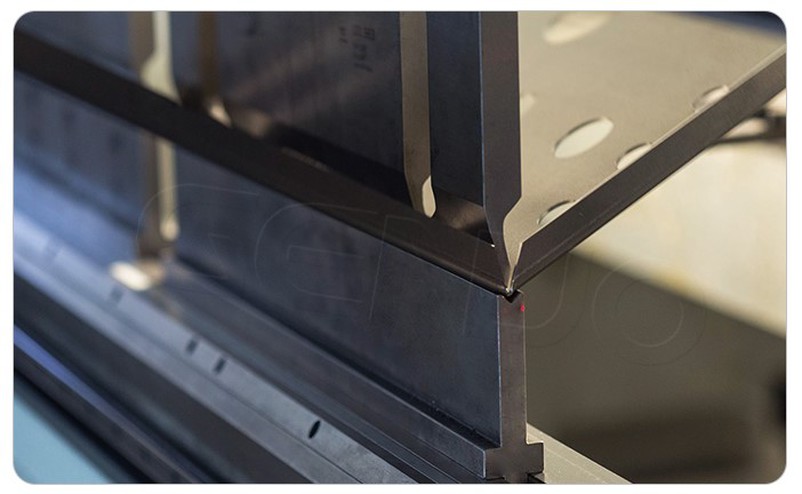
In summary, sheet metal tolerances are essential to ensure precision, accuracy and consistency in metal working, they help smooth assembly, meet customer expectations, and adapt to environmental factors. Manufacturers must adhere to specified tolerances to avoid quality problems, reduce production costs, and keep customers satisfied.
After knowing this, you can visit our website, if you need to learn more about CNC press brake machine knowledge or buy a machine and tools , you can also consult our sales staff, they can recommend you the best smart press brake for you.


